
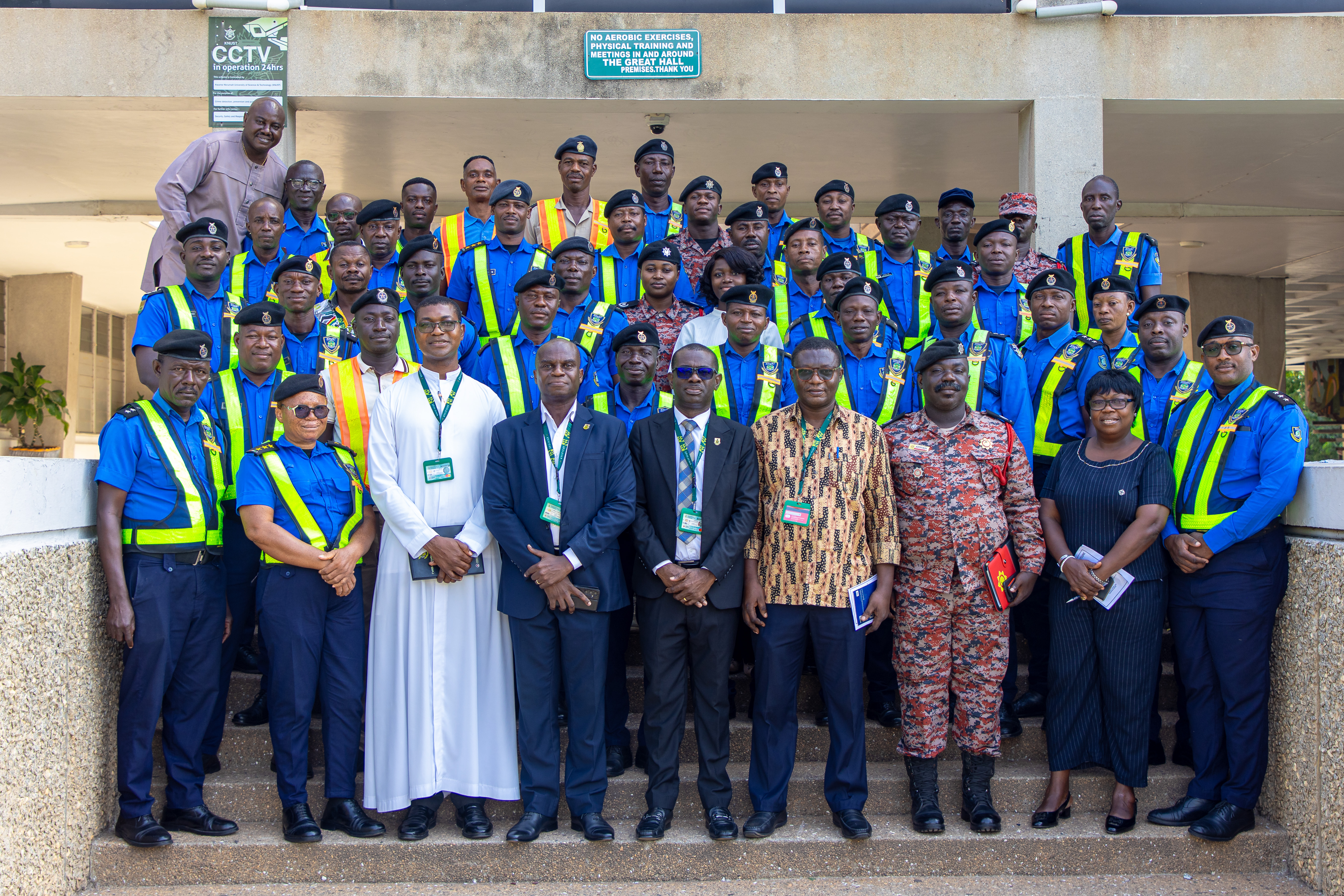
The Security Services at the Kwame Nkrumah University of Science and Technology, Kumasi (KNUST), has begun its biennial Security Supervisors Training Course, aimed at strengthening the professionalism and operational effectiveness of campus security personnel.

The Head of Security Services, Lt. Col. Richard Cobba-Eshun (Rtd), said the initiative forms part of a broader strategy to institutionalise professionalism within the university’s security framework.
“In recent years, the Security Services has embarked on structured training programmes with the aim of making our officers more professional and effective in the performance of their duties,” he said.
He said professionalism in security is built through continuous and deliberate effort, adding that the programme is designed to equip participants with both technical and managerial competencies required for effective supervision.
“Professionalism in any security establishment is built on continuous training, ethical conduct, and the ability to perform duties efficiently,” he added.

The Registrar of KNUST, Mr. Benjamin Boampong Owusu, highlighted the strategic importance of security to the university’s long-term vision, noting that the training aligns with the institution’s Corporate Strategic Plan (2026–2035), particularly its focus on creating a safe and secure campus environment.
“This training is very important at this stage of our growth. If we want to achieve our vision, then we must deliberately build capacity and security is a critical part of that agenda,” he said.
He said professionalism among security personnel plays a critical role in shaping the university’s image and attractiveness to both local and international students.
“A safe and secure environment is essential for academic excellence and institutional growth,” he said.
Mr. Boampong encouraged participants to embody discipline, uphold ethical standards and apply the knowledge gained from the training.
“Sometimes it’s not about confrontation. When you approach people professionally and with respect, they open up and that alone can prevent potential threats,” he said.
He also underscored the growing role of technology in modern security operations, urging officers to adapt to tools such as surveillance systems and other emerging digital solutions.
The training covers areas including leadership, communication, emotional intelligence, legal frameworks and emergency response. Participants will also undergo physical drills and health-related sessions, including awareness on the prevention of non-communicable diseases.
| Story: Belinda Opoku Danso | Photos: Isaac Kwaku Duah |


